Gallery Baton is pleased to announce 《Scène Dorée》, a solo exhibition of works by a British painter, Christian Hidaka (b. 1977), from 23rd November to 23rd December in Hannam-dong, Seoul. His paintings have often featured a combination of exotic figures and obscurely specified temporal-spatial backdrops described in oil tempera over carefully constructed murals. His practice is known for its authentic fusion of his original background and a wide range of Western painting references. As his first solo exhibition in Asia since the two-person show at Le Forum Hermes Tokyo in 2022, it will allow the Korean audience to discover his new series and mural paintings achieved over several weeks.
-

-
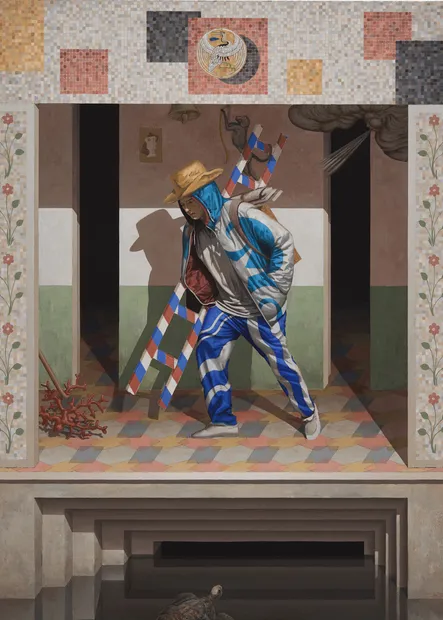
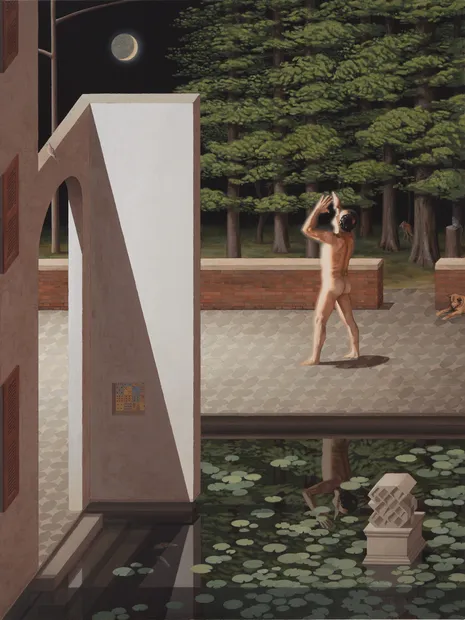
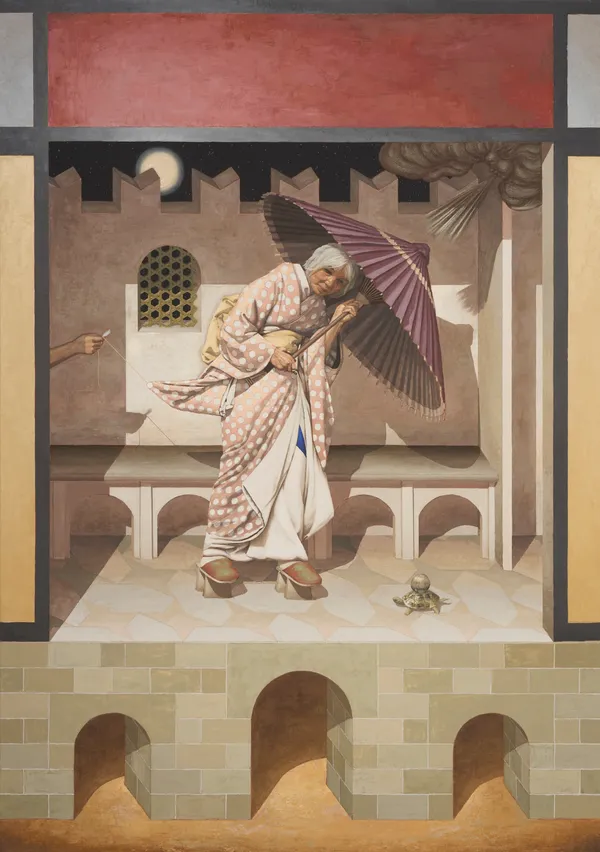
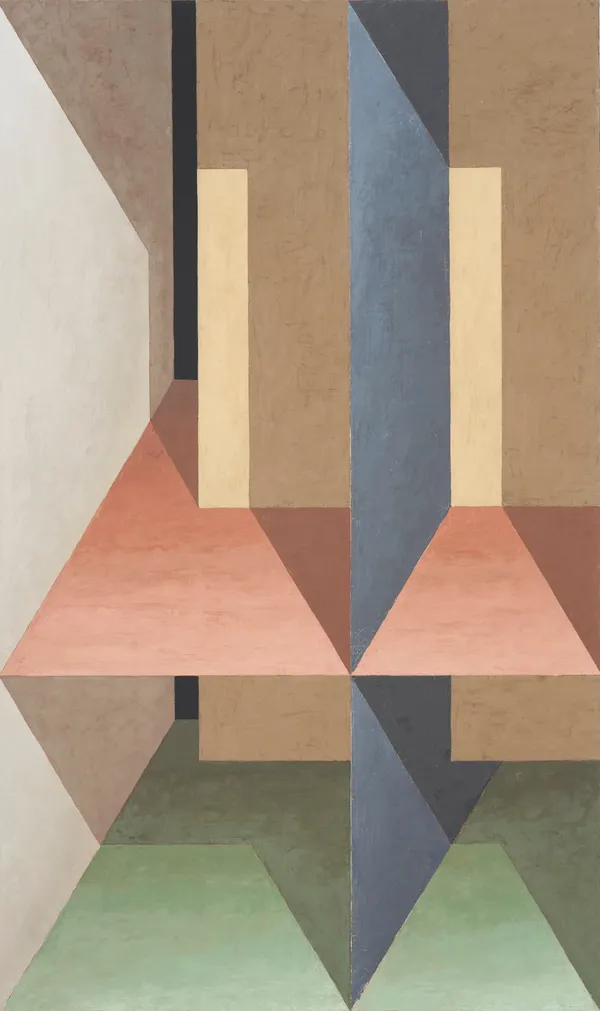
The scene of characters in garments whose primary source is unclear preoccupying themselves in certain activities is as dramatic as a theatrical moment, and the art-deco bisymmetric background giving the figures enough space to pose has an overwhelming sense of dimension led by the stark contrast on light and shade. Since Hidaka applies the “Chiaroscuro” across paintings, he lends a sense of realism to unknown beings, which closely engages with the notion of “Eurasian,” one of his axes of the ‘Christian Hidaka Universe’ influenced by his origin. He recognizes that the existence of “Cultural hybridity”—whose socio-cultural identities are too ambiguous to define, unlike Eastern, Western, European, or African—has a long history as exchange, albeit in a non-mainstream way. In terms of formality, his viewpoint, possibly called the Eurasian Mode, evolves into distinct visual aspects. In addition to the Chiaroscuro mentioned above, he adopts the inverse perspective of Eastern paintings to build a sense of dimension over the described spaces and to make every detail of the whole scene even without hierarchy at the same time.
-
-
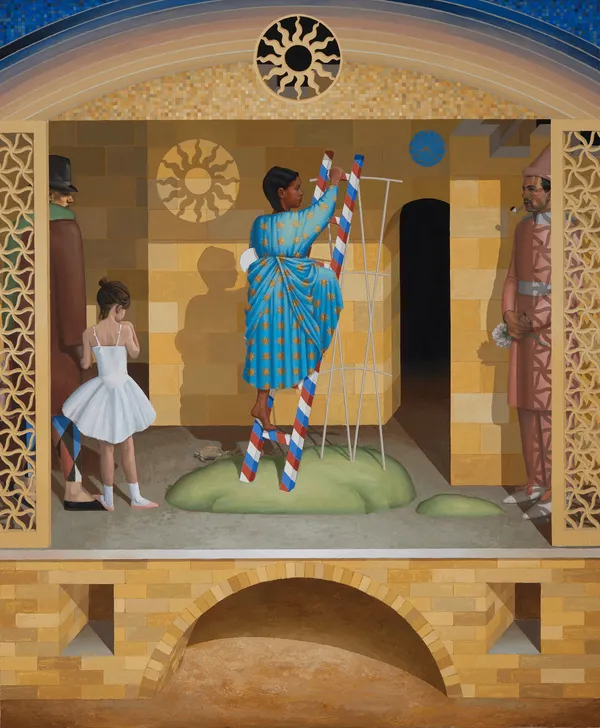
<Scène Dorée>(2023), homonymous with the exhibition title, depicts a girl standing with a man who is assumed to be the girl's father, while a pierrot on the other side looks at a woman who climbs a ladder in a picturesque costume in the center. Taking <Family of Saltimbanques> (1904) by Picasso as a motif, the work reminds viewers of the painting tradition of the period by borrowing the composition and characters similar to the original painting at first, and it later delivers the artist’s unique view of the development of the contemporary art through the adaptation of various symbols. For example, the tricolor of the ladder and the mix of ethnicities of the work reflect the background of the emergence of Cubism and its motif, African art, which Hidaka was deeply interested in as a research subject, and also transculturalism, which began to receive attention since the 90s. In particular, the sun sculpted right above the woman's head symbolically encapsulates the artist's argument that contemporary painting needs an advance in the "structure of a screen" as revolutionary as what occurred around the advent of Cubism, away from biased concentration and narrow discussion on non-essential and microscopic factors such as style and motivation.
-
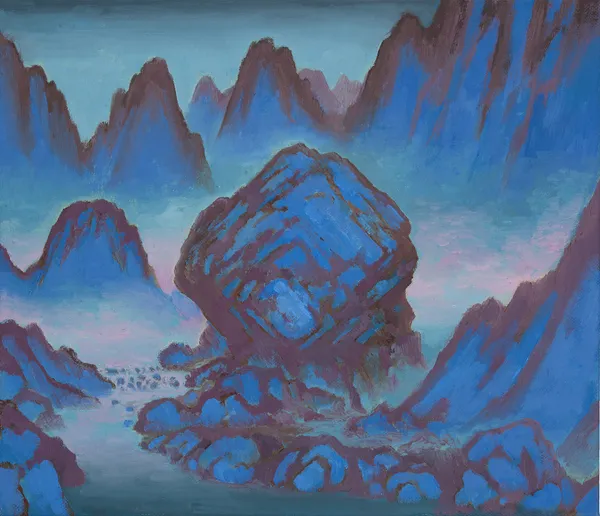
Christian Hidaka
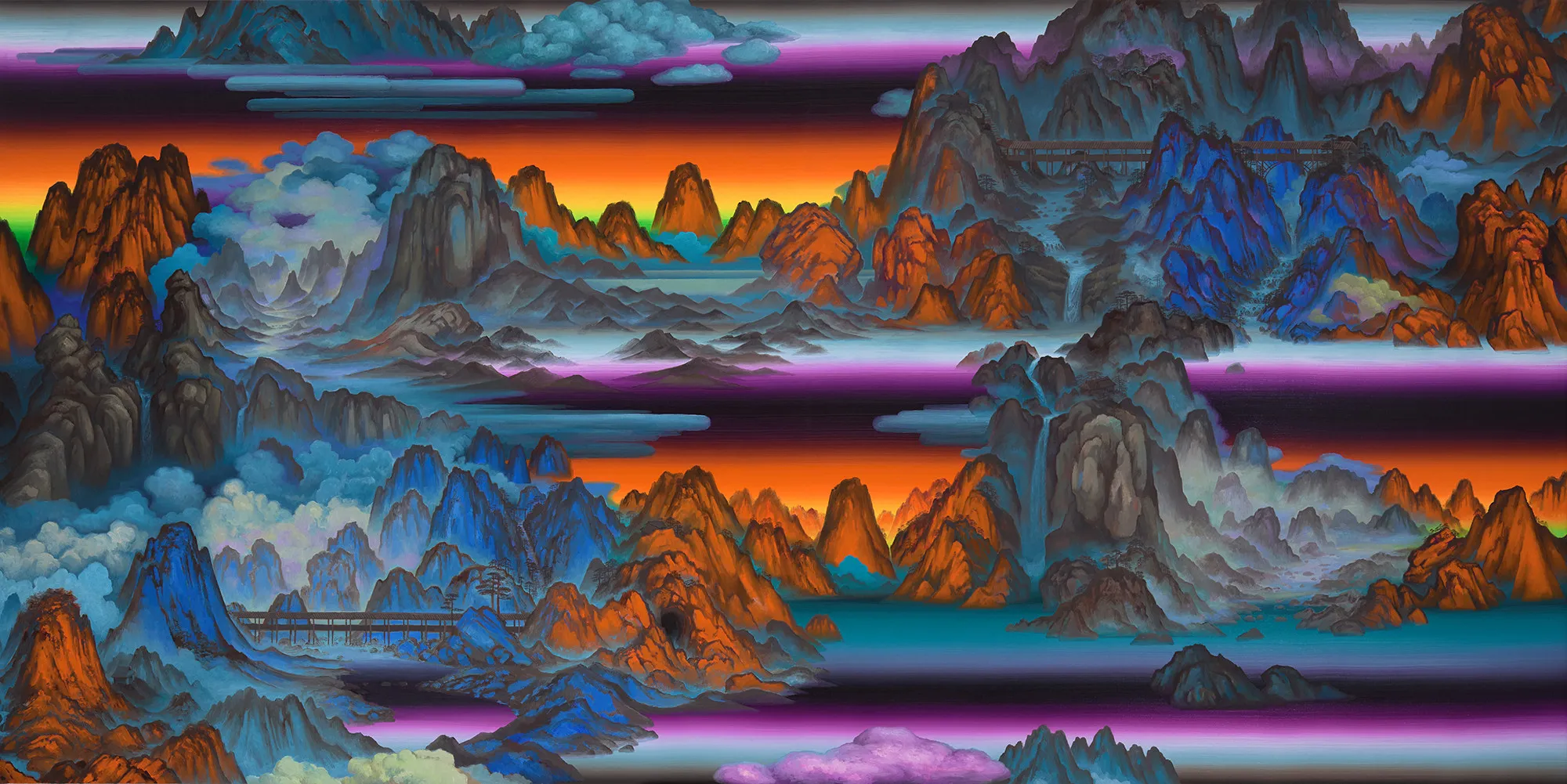
Mountain Walkways, 2023oil tempera on linen
136 x 272 cm -
The dreamlike space created by the harmony of murals and paintings is crucial to comprehending his practice. Playing the role of a Sinnfeld that reconciles each painting piece, the murals make the audience settle in the white cube that shifts into the hybrid space where Hidaka's Eurasian Mode reveals itself. As though a play has a different background setting each act to keep pace with its dynamic plot line and the changes in the emotion of actors, the variation of colors and compositions along the wall encourages the visitors to entirely immerse themselves in his uncanny cultural context through experiencing the sophisticate staging, instead of simply following a linear way of appreciating the separate pieces.
-